Quick answer: In Australia, north facing panels capture the most energy over a year. West facing suits households that use most of their power in the afternoon and evening. Measure your roof’s real direction with the free azimuth calculator below before you compare quotes.
If you ask an installer which way solar panels should face in Australia, the textbook answer is north. We’re in the southern hemisphere, so a north facing roof sees the sun for more of the day than any other, and over a full year it captures the most energy.
The real answer is a bit more interesting than that.
What about east and west roofs?
An east facing roof makes most of its power in the morning. A west facing roof makes most of its power in the afternoon and evening, which is exactly when many households use the most electricity. If nobody is home until 5pm, a west facing array can be worth more to you than a north facing one, because you use the power instead of exporting it for a small feed in tariff.
South facing is the weakest option in Australia, but even that is not automatically a dealbreaker on a shallow pitched roof. The penalty depends on the tilt, and it’s often smaller than people expect.
What is azimuth, exactly?
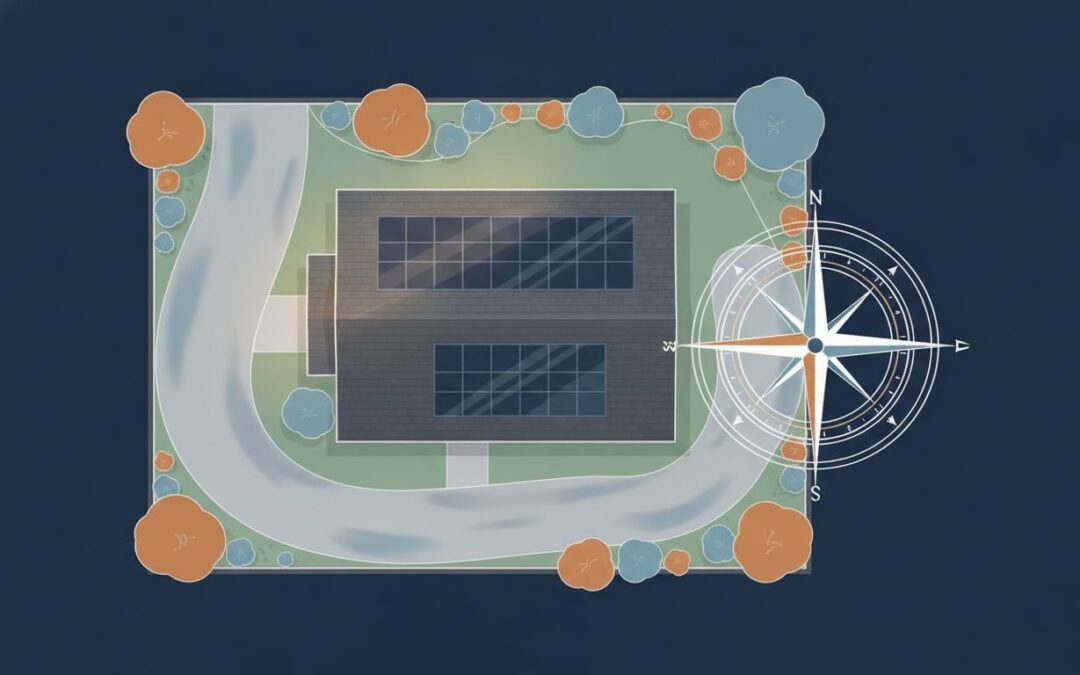
Azimuth is the compass direction your roof faces, measured in degrees from true north. Due north is 0°, east is 90°, west is 270°. Every solar quote and yield estimate leans on this number, and it’s surprisingly easy to get wrong.
A phone compass points at magnetic north, not true north, and depending on where you are in Australia the difference can be more than 10 degrees. Eyeballing Google Maps is better, but people still guess.
How do I measure my roof’s azimuth?
We built a free tool for exactly this. Type your address, draw a line along your roof on the satellite photo, and the Roof Azimuth Calculator gives you the azimuth from true north. It takes about a minute, there’s no signup, and it works for any address.
Once you know your azimuth, feed it into the Solar Panel Angle Calculator along with your roof tilt and postcode. It will tell you what share of the ideal solar yield your roof captures, so you can compare quotes with real numbers instead of guesses.
Already have solar?
The direction of your roof was locked in the day the house was built. What isn’t locked in is whether every panel is still working. Orientation sets the ceiling on what your system can produce; faults decide whether it gets there. That second part is what PV Fleet watches for you, on any inverter brand.