Last updated 10 September 2026
Quick answer: Most solar faults hide inside normal weather variation, so owners find them months late. A monitoring service that models what your system should produce, like PV Fleet, flags a genuine fault within hours.
Most solar owners assume that once the panels are on the roof, the savings take care of themselves. To be honest, that’s rarely how it plays out. Solar systems quietly underperform all the time, and most faults go unnoticed for months, often until the next annual service.
Why faults hide in plain sight
Your inverter app shows you data, but it doesn’t tell you what should be happening. Output naturally rises and falls with the weather, shading and the seasons, so a genuine fault looks a lot like a normal cloudy week. A failed string, new shading from a tree that’s grown, a slow decline in panel efficiency; they all hide inside that day to day variation. By the time the numbers are obviously wrong, you’ve already lost months of generation.
What underperformance actually costs
Raptor Maps, a company that inspects large solar farms, analysed 125 GW of solar systems across 41 countries and put the cost of preventable underperformance at around US$4.6 billion a year worldwide. That figure is mostly utility scale, but the same problem exists on homes and businesses. A single faulty panel can quietly drag down every panel wired with it, and on a commercial system one undetected fault can mean thousands in lost production before anyone notices.
Closer to home, a 2018 CHOICE survey of more than 1,000 of its members with solar found 21% didn’t know how much power their system generates, and 46% used their electricity bill to track performance. The trouble with the bill method is timing. If your system stops working the day after a bill arrives, you won’t find out for another three months.
How to catch it early
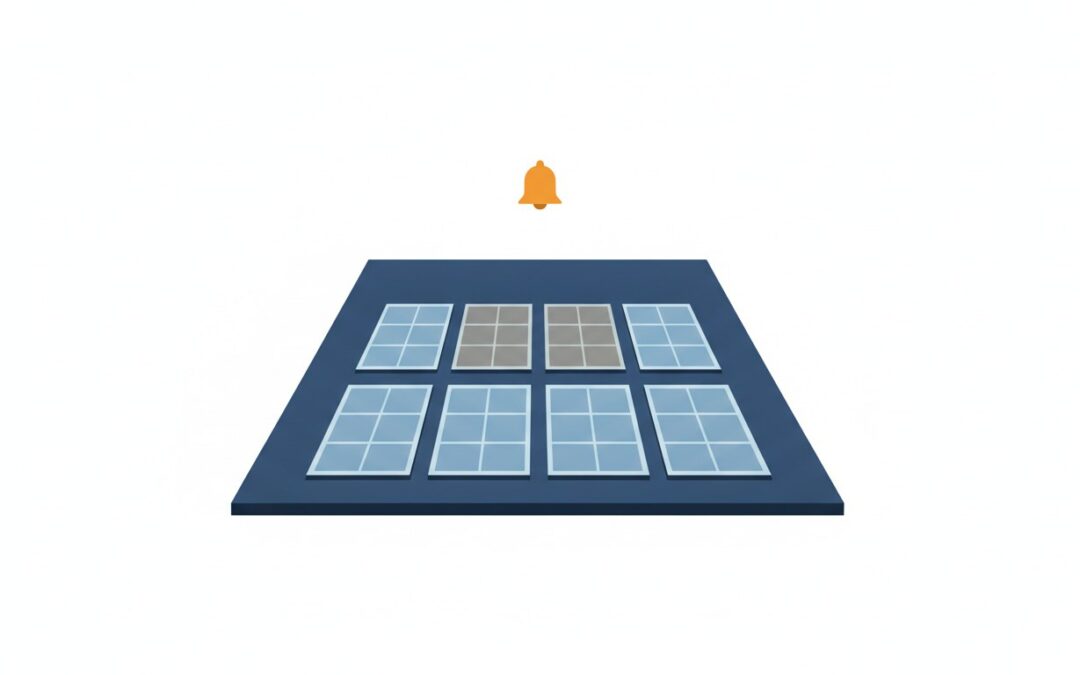
More charts won’t solve it. What you need is something that knows what each system should be producing and speaks up within hours when it isn’t. That’s what PV Fleet does. It learns each system’s normal performance, accounts for weather and shading, and sends an alert within hours when something is genuinely wrong. It works on any inverter brand, with no new hardware.
Want to see it on a live system? Book a free 15 minute demo and we’ll show you fault detection in action.
And if you are planning a new system rather than reporting on an existing one, the free solar tools will give you roof azimuth, pitch, panel count and expected yield for any address before you talk to an installer.